
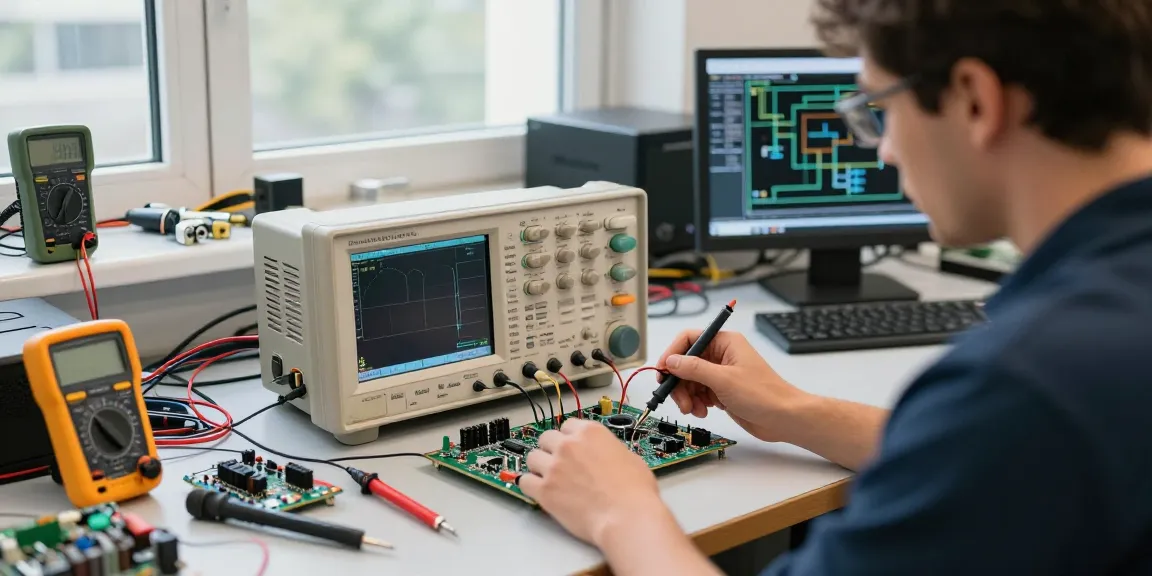
Understanding Portable Oscilloscopes
In the ever-evolving landscape of electronics, the importance of portable oscilloscopes cannot be overstated. These compact yet powerful devices allow technicians, engineers, and hobbyists alike to conduct precise diagnostics and troubleshooting on-site. Among the options available, the Portable Oscilloscope stands out for its versatility and advanced features, making it an indispensable tool for many applications.
What is a Portable Oscilloscope?
A portable oscilloscope is a compact, handheld device designed to measure and display electrical signals in a convenient format. Unlike traditional oscilloscopes, which are often bulky and confined to lab settings, portable oscilloscopes allow users to perform real-time analysis in various environments, from fieldwork to educational settings. These devices provide crucial insights into signal behavior, frequency analysis, and waveform characteristics, enhancing the efficiency of troubleshooting processes.
Key Features and Specifications
Portable oscilloscopes, like the HANMATEK® HO102S, typically include a range of features that cater to various testing needs:
- Bandwidth: A bandwidth of 100 MHz is standard, allowing the analysis of a wide range of electronic signals.
- Sampling Rate: With a sampling rate of 250 MSa/s, users can capture fast waveforms with high precision.
- Display: A clear 3.5” TFT backlit display enhances readability in diverse lighting conditions.
- Memory Functions: Enables storage and recall of waveforms for further analysis.
- Battery-Powered: Designed for portability, these devices are often equipped with rechargeable batteries for on-the-go usage.
Benefits of Using a Portable Oscilloscope
The advantages of using a portable oscilloscope are manifold:
- Flexibility: Ideal for automotive diagnostics, educational purposes, and fieldwork.
- Space-Saving: Compact design allows for easy transport and storage without sacrificing performance.
- Ease of Use: User-friendly interfaces enable quick navigation through settings and modes, making them accessible to beginners and experienced users alike.
- Data Storage and Analysis: Users can store waveforms for later review, enhancing data analysis capabilities.
How to Use a Portable Oscilloscope Effectively
Getting the most out of a portable oscilloscope requires proper setup and operational knowledge. Here’s a guide to help users maximise their experience with devices like the HANMATEK® HO102S.
Setting Up Your Device
Starting with the correct setup is vital. Follow these steps:
- Power On: Press the power button and ensure the device is adequately charged.
- Select Mode: Choose between oscilloscope and multimeter functions according to your measurement requirements.
- Connect Probes: Attach the appropriate probes to the device and the signals to be measured.
Common Measurement Techniques
Understanding measurement techniques is essential for accurate readings. Some common methods include:
- DC Measurements: Use the multimeter function to measure direct voltage and current.
- AC Signal Analysis: Observe waveforms to assess signal amplitude, frequency, and other characteristics.
- Trigger Settings: Adjust the trigger settings to stabilise the waveform display for easier analysis.
Best Practices for Accurate Readings
To ensure precision in measurements:
- Calibrate the device before use to enhance accuracy.
- Use shielded cables to avoid noise interference.
- Regularly check battery levels to prevent unexpected shutdowns during critical measurements.
Applications of Portable Oscilloscopes
Portable oscilloscopes are utilised across various industries and educational settings, providing immense value in multiple applications.
Field Diagnostics and Repair
In the field, these oscilloscopes offer technicians the ability to quickly diagnose and fix issues in electronic systems, including automotive electronics and industrial machinery. This mobility is crucial when dealing with devices that may be in hard-to-reach locations.
Educational Use in Workshops
In educational contexts, portable oscilloscopes allow students to engage in hands-on learning experiences. They facilitate experiments in understanding electrical signals and circuits, making complex theories more accessible and understandable.
Automotive and Industrial Applications
The automotive industry benefits greatly from portable oscilloscopes, which are crucial for testing sensors, motors, and other electronic systems in vehicles. Additionally, they are increasingly used in industrial settings for troubleshooting equipment and ensuring operational efficiency.
Comparing Portable Oscilloscopes with Traditional Models
An evaluation of portable oscilloscopes versus traditional models reveals several key differences that may influence purchasing decisions.
Advantages of Portability
Portability allows users to perform sophisticated measurements in remote locations without the need for large equipment, making it ideal for on-site diagnostics and repairs.
Cost-Effectiveness and Practicality
Portable oscilloscopes generally offer a more budget-friendly option without compromising essential functionalities, making them accessible for both professionals and hobbyists.
Limitations and Considerations
While portable oscilloscopes are convenient, users should consider potential limitations such as:
- Less bandwidth and sampling options compared to high-end traditional oscilloscopes.
- Limited screen size which may affect the visibility of detailed waveforms.
- Potential battery performance issues depending on usage.
Future Trends in Portable Oscilloscope Technology
The development of portable oscilloscopes is likely to advance significantly, introducing innovative technologies that enhance their functionality and user experience.
Innovations to Watch For in 2026
Emerging trends include improved battery technology for longer usage times, higher resolution screens for better clarity, and enhanced connectivity options for seamless data sharing with other devices. These advancements will make portable oscilloscopes even more indispensable.
Integration with Smart Devices
Future models may also integrate with smartphones and tablets, allowing users to control the oscilloscope remotely and view data in real-time from their personal devices, thereby expanding usability in various applications.
Emerging Market Needs and Solutions
As industries evolve, the demand for portable oscilloscopes will increase, especially in the fields of telecommunications, renewable energy, and IoT. Meeting these needs will require ongoing innovation and adaptation of existing technologies.
What are the main functions of a Portable Oscilloscope?
The primary functions of a portable oscilloscope include measuring voltage, frequency, and signal integrity, as well as providing data storage and analysis capabilities.
Why choose a Portable Oscilloscope over a traditional one?
Users may prefer portable oscilloscopes for their convenience, ability to perform measurements in various locations, and cost-effectiveness without significant compromises in functionality.
How do I troubleshoot issues with my Portable Oscilloscope?
Troubleshooting involves checking probe connections, recalibrating the device, and ensuring that settings are correctly configured to capture the desired signals accurately.
Can I use a Portable Oscilloscope for educational purposes?
Absolutely! Portable oscilloscopes are excellent tools for educational settings, allowing students to conduct experiments and understand electronic principles in an interactive manner.
How to maintain my Portable Oscilloscope?
Regular maintenance includes keeping the device clean, calibrating it periodically, and ensuring battery health for optimal performance during usage.